Many people still rely on smartphones for almost everything, but the excitement around new phone launches has slowly started to fade. Earlier, every new model felt like a real upgrade with clear improvements in camera, speed, and display.
Now the changes are smaller and often not enough to feel different in daily use. Because of this, smartphones are starting to feel more like routine tools instead of exciting technology.
At the same time the tech world is already moving in a different direction. Big companies are exploring ways to reduce how much people depend on a single device.
In this article, you will understand what is changing in the tech industry, why companies are moving beyond smartphones, and what kind of technologies could replace or reduce their role in the future.
Basic Understanding of the Future Beyond Smartphones
The idea behind this shift is simple. Smartphones have been the center of digital life for more than a decade, used for communication, work, entertainment and learning.
But many companies now believe this model is reaching its limit because it still depends too much on one device.
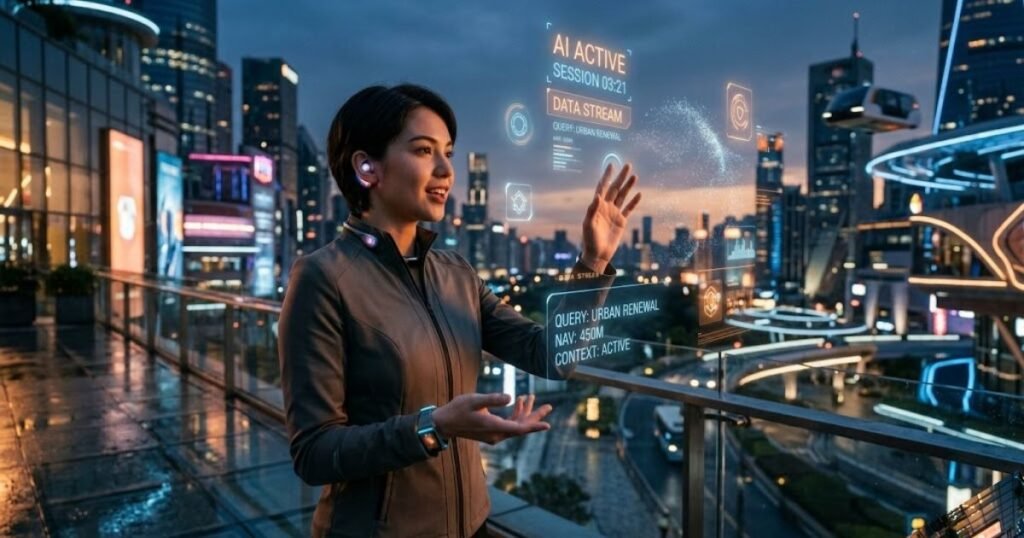
Instead of constantly using a phone, future technology may be always present but less visible. It will work in the background and respond only when needed, without constant attention.
This is the core idea behind tech giants envisioning a future beyond smartphones, where technology becomes more natural, intelligent, and less distracting in daily life.
Why Does This Change Matters Today?
Technology always changes when old systems reach their limits. Smartphones are still powerful but they have created new problems in daily life.
People spend too much time on screens. Many users feel digital fatigue. The experience of using apps is becoming repetitive. Most tasks still require tapping and scrolling.
Because of this companies are searching for better ways to interact with technology. They want systems that feel more human and less mechanical.This shift matters because it will change how people communicate, work, learn and entertain themselves in the coming years.
What Is Driving This Transformation?
One of the biggest forces is artificial intelligence. AI powered systems can understand language, context, and user behavior which reduces the need to manually open apps.
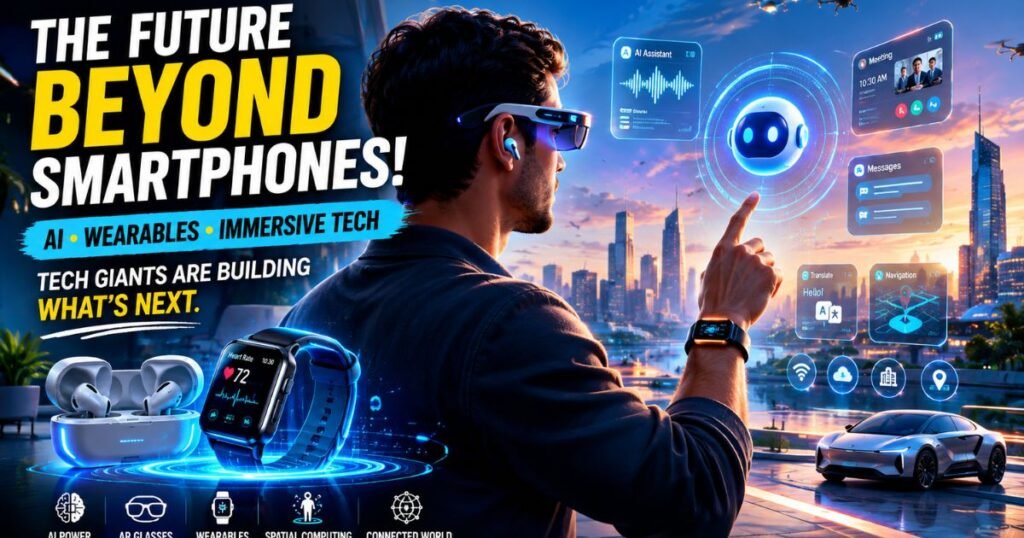
Another important force is wearable technology. Devices like smartwatches, earbuds, and smart glasses are becoming more advanced every year and are slowly taking over some functions.
A third key force is immersive computing, which includes augmented reality and spatial computing. These technologies allow digital information to appear directly in the real world.
Together all these developments support the idea that tech giants envision a future beyond smartphones where interaction becomes more natural and less dependent on handheld devices.
Core Principles Behind the New Computing Era
The future being designed by tech companies follows a few simple but powerful principles. Technology should feel natural and easy to use instead of something you have to learn or manage.
Devices should reduce effort in daily life rather than add extra steps. Information should appear exactly when needed without searching for it manually.
Another important idea is that interaction should slowly move away from touch screens and become more voice based, gesture based or even automated.
Together these principles show that the goal is not just innovation. It is a complete transformation of how humans and machines interact in everyday life.
How Major Tech Companies Are Preparing?
Different companies are working on different parts of the same future.
Apple Vision
Apple is focusing on spatial computing. Their vision is to replace traditional screens with immersive digital environments. Devices like Vision Pro show how digital objects can exist in real space. The long term idea is lightweight glasses that may reduce the need for phones.
Google Strategy
Google is building an AI first ecosystem. Their focus is on assistants that understand users without commands. They are also exploring smart glasses and ambient computing systems that work across devices.
Meta Direction
Meta is investing in AR glasses and virtual environments. Their goal is to make social interaction and communication happen in immersive spaces instead of flat screens.
Microsoft Approach
Microsoft is working on mixed reality and workplace integration. Their vision focuses on productivity tools that exist in 3D environments and AI supported workflows.
Samsung Expansion
Samsung is developing foldable devices, wearables and smart systems that connect across ecosystems. Their goal is a flexible multi device future.
Role of Artificial Intelligence in This Shift
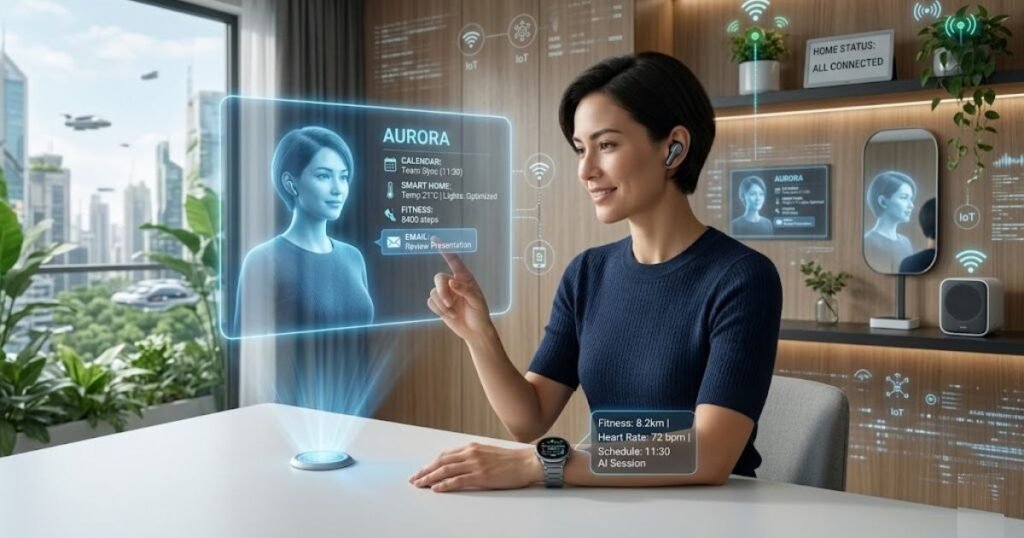
Artificial intelligence is the main driving force behind this transformation. Without AI, the idea of reducing dependence on smartphones would not be possible.
Today AI systems are already capable of handling tasks like summarizing long information, answering questions, writing content and managing daily schedules.
In the future, AI will go even further and act like a personal assistant that understands context, habits, and user needs without being constantly instructed.
Instead of opening different apps for every task users will simply talk or interact with their AI system and get things done instantly. This shift is a key step in the direction of tech giants envision future beyond smartphones.
Rise of Augmented Reality Glasses
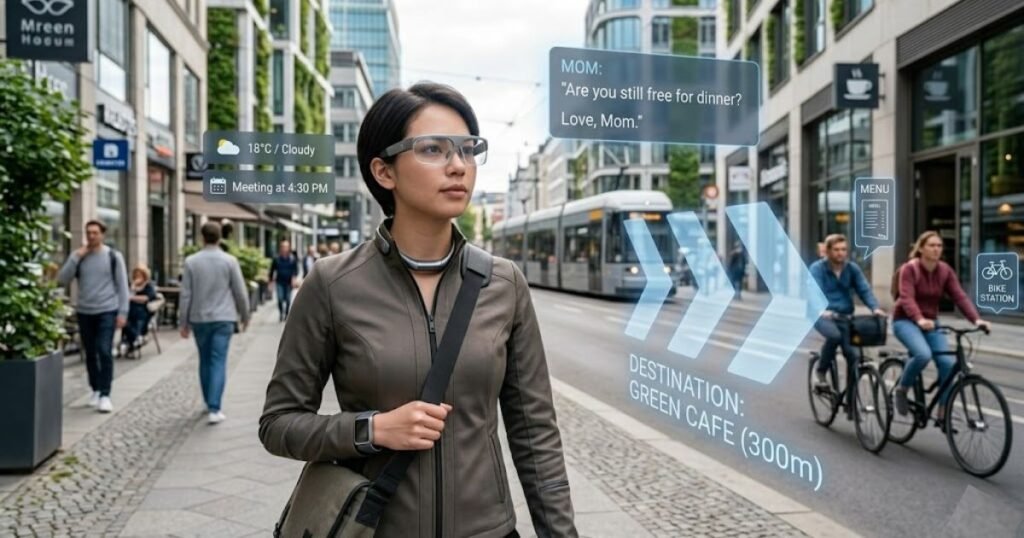
Augmented reality glasses are one of the most important technologies in this transition. They allow digital information to appear directly in the user’s field of view, blending the real and digital worlds into one experience.
Instead of constantly checking a screen, users can see navigation, messages, and notifications naturally in front of them. This creates a hands free and more seamless way of interacting with technology.
Companies like Apple, Google and Meta are actively developing versions of this technology. Over time these glasses may become a primary interface for digital interaction, gradually reducing the need for traditional smartphones.
Spatial Computing and Immersive Work
Spatial computing is another important concept shaping this future. It allows digital content to exist in a three dimensional space instead of being limited to a flat screen.
Instead of opening apps on a phone or laptop, users will interact with floating windows, virtual objects and tools placed around them in real space. Workspaces will become more flexible and immersive, where everything feels naturally placed in the environment.
This shift will change the way people work, learn, and create. It can also reduce the need for traditional monitors and fixed computer setups, as digital screens can be created virtually whenever needed.
Wearable Devices and Ambient Technology
Wearable devices are already becoming part of everyday life. Smartwatches, earbuds and health trackers are just the starting point of this transformation.
In the future, wearables will become more powerful and deeply connected with other devices. They will be able to collect real time data, respond to voice commands and provide instant assistance.
These devices are a key part of the idea of ambient computing, where technology is always available when needed but does not demand constant attention or distract the user from daily life.
Challenges in Replacing Smartphones
Even with strong innovation, this transition comes with several important challenges that cannot be ignored.One major concern is privacy. Wearable and always on devices continuously collect data, which raises questions about how that information is stored, used, and protected.
Cost is another challenge. New technologies are usually expensive in the early stages, which means they will not be accessible to everyone right away.
Design also plays a key role. Devices must be comfortable enough to wear for long periods and socially acceptable in everyday environments.
At the same time, software systems need to be completely redesigned to support new types of interaction like voice, gestures, and immersive controls.
Future Timeline of This Transition
The shift away from smartphones will not happen overnight. It will be a slow and gradual process that unfolds in different stages over time.In the early stage, smartphones will still remain the primary device for most people. However, they will be supported by wearables and AI based tools that handle specific tasks.
In the middle stage, more users will start adopting AR glasses and spatial computing devices for daily activities like communication, navigation and work. During this phase, smartphones will begin to lose their central role.
In the later stage most digital interactions will take place through wearables and ambient systems. Smartphones may still exist but they will likely be used only for specific or advanced tasks rather than everyday interaction.
Conclusion
The world of technology is moving into a new phase where smartphones are no longer the main center of everything. Big companies are now focusing on building systems powered by AI wearables and immersive computing.
This shift will deeply change the way people live, work, and communicate. Instead of constantly interacting with a screen technology will become more natural, more automatic and less visible in everyday life.
The idea that tech giants envision a future beyond smartphones is not just a future prediction anymore. It is already taking shape through ongoing research, new product development, and continuous innovation across the tech industry.
FAQs
What does tech giants envision a future beyond smartphones mean?
It means major technology companies are planning a future where smartphones are no longer the main device. Instead wearables AI and immersive systems will handle most digital interactions.
Will smartphones disappear completely?
Smartphones will not disappear. They will become less important over time as new devices take over many of their functions.
What technology will replace smartphones?
Smart glasses AI assistants wearables and spatial computing systems are the main technologies expected to reduce smartphone dependence.
Why are companies moving away from smartphones?
Because innovation in smartphones has slowed and users want more natural and less screen based interaction with technology.
When will this future become reality?
Experts believe the transition will happen gradually over the next decade with major changes becoming visible between 2030 and 2040.