
Fascisterne is a Scandinavian term used to describe supporters of fascist ideology. The word appears often in Danish Norwegian and Swedish political writing and it translates roughly to “the fascists.”
At first glance the term looks simple. But its background connects to one of the most studied and debated political movements in modern history. Understanding what it means requires looking at where fascism came from how it operated and why historians still return to it decades later.
This guide breaks the term down in plain language. It covers the origin of the ideology, the leaders who shaped it and the reasons the topic still comes up in political discussions today.
What Does Fascisterne Mean?
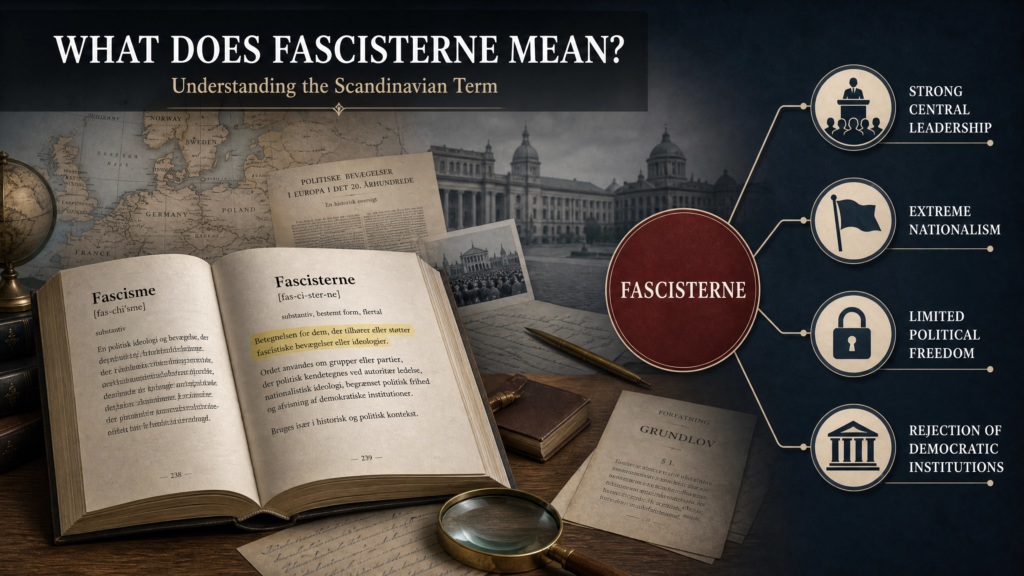
Fascisterne is a plural noun in Scandinavian languages that identifies individuals or groups who support fascism as a political system. In everyday use it functions the same way “the fascists” does in English.
The term is not a separate ideology on its own. It is a label for the people who follow one. Fascism itself is generally built around a few recurring features:
- A strong centralized leadership structure
- Extreme nationalism
- Reduced political freedom for citizens
- Rejection of democratic institutions
Political scientists and historians use the term when analyzing authoritarian movements. It gives researchers a way to talk about the followers of an ideology and not just the ideology itself.For more history and politics explainers like this one you can browse through Pepper0.
Where the Term and the Ideology Came From?
The roots of fascism trace back to Italy in the early 1900s. After World War I the country faced economic collapse, political instability and widespread public frustration. People wanted stability and many were open to strong leadership that promised quick results.
The word fascism comes from the Italian term fascio which means a bundle or group. It symbolized unity under one central authority. That symbolism became central to the movement’s identity.
Benito Mussolini became the face of this early fascist movement in Italy. He promoted the idea that a powerful centralized state could restore national pride and fix the chaos of the postwar years. His approach became a model that other movements across Europe later adapted in their own way.
Core Beliefs Behind Fascist Ideology
Fascist ideology is not random. It follows a consistent set of principles that shaped how these regimes governed.
Strong Central Authority
Power sits with a single leader or a tightly controlled party. Decisions flow from the top down and there is little room for internal disagreement.
Extreme Nationalism
National identity takes priority over individual identity. The state pushes unity based on shared culture, ethnicity or history and frames this unity as essential to survival.
Limited Individual Freedom
Speech media and political opposition are restricted. The state justifies this by claiming that unity requires control.
Rejection of Democracy
Fascist movements typically view democratic systems as slow weak or unable to solve national problems. They present centralized control as the more efficient alternative.
Militarism
Military strength is treated as proof of national power. Many fascist regimes built their identity around military expansion and discipline.
These five features appear across nearly every fascist movement in history even when the local details differed.
The Role of Leadership in Fascist Systems
Leadership sits at the center of every fascist movement. These systems are usually built around one dominant figure who becomes the face of the state itself.
In practice that leader is presented as:
- A symbol of national unity
- A protector against outside threats
- The final decision maker on every major issue
Adolf Hitler is the most referenced example. His leadership in Germany during the 1930s and 1940s pushed nationalism to an extreme level and led directly to global conflict. In Spain Francisco Franco built a different but related model of authoritarian rule following the Spanish Civil War. Historians still debate how closely Franco’s regime matched classic fascism compared to a broader authoritarian conservatism but both cases show what happens when power concentrates in a single figure with little accountability.
How Nationalism Fuels Ideology?
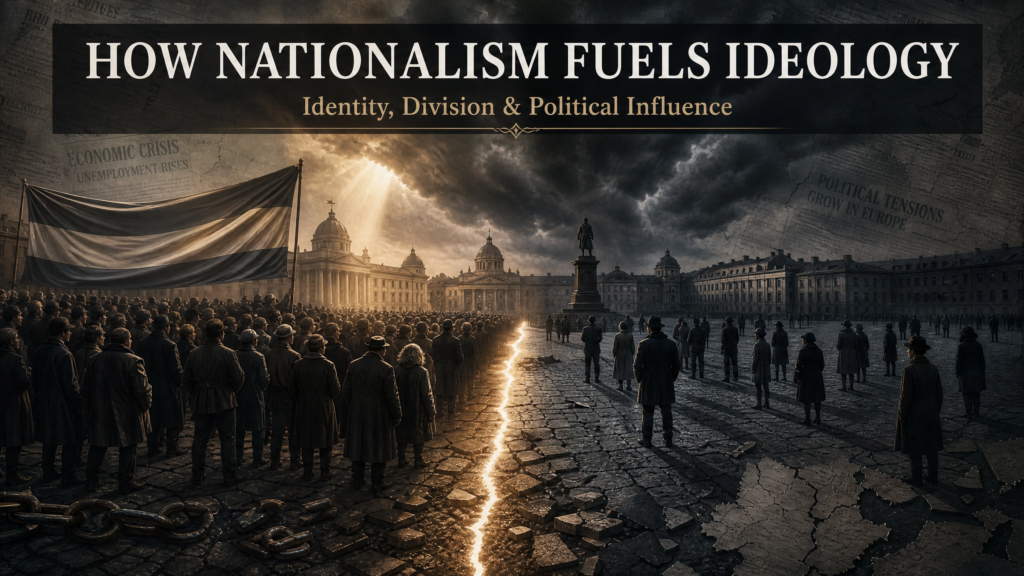
Nationalism sits at the emotional core of fascism. It creates a shared identity that people can rally around especially during periods of hardship.
The problem is that fascist nationalism tends to draw sharp lines. It separates people into an “us” considered true members of the nation and a “them” viewed as outsiders or threats. That division often becomes the basis for discrimination and internal conflict.
Historically this pattern grows stronger during economic or political crises. Leaders use a shared national identity to mobilize public support quickly especially when people are already anxious about the future.
Fascisterne in Historical Context
The most active period for fascist movements ran from the 1920s through the 1940s. During these two decades regimes rose across parts of Europe using strikingly similar tools:
- Heavy propaganda campaigns
- Tight military control
- Suppression of political opposition
Mussolini’s government in Italy focused on restoring national pride. Hitler’s Germany expanded these ideas into a far larger and more destructive system that eventually triggered World War II.
The consequences were severe. Thoughtless it was not. It was calculated and it caused one of the deadliest conflicts in human history. After 1945 fascism was rejected across most of the world and new international systems were built specifically to prevent similar regimes from rising again.
The Impact of Fascism on Society
Fascist systems left a complicated legacy. Supporters at the time often pointed to short term stability. They argued that centralized control brought order to chaotic economies and gave citizens a stronger sense of national identity.
That view ignored the deeper cost. Fascist regimes consistently restricted basic freedoms including speech and assembly. Political opposition was suppressed often through force. Human rights violations became common under nearly every regime that followed this model.
Fear became a governing tool. People lived under constant pressure to conform and disagreement carried real risk. Even after these regimes collapsed the psychological and social effects lingered for generations in the countries involved.
How Fascisterne Is Understood Today?
Modern scholars study fascism mainly through political science, history and sociology. The goal is to understand how authoritarian systems form and how democratic institutions weaken when they do.
The term still shows up in political commentary today but it needs to be used carefully. It carries real historical weight tied to specific regimes and real human consequences. Using it loosely as an insult strips away that meaning and makes serious discussion harder.
Modern democracies were largely built as a direct response to this history. Rule of law, protection of human rights and freedom of expression are not accidental features. They exist specifically to prevent the kind of concentrated unchecked power that defined fascist regimes.
Why Does This History Still Matters?

Fascism belongs to the past but the lessons from it are still relevant. Economic instability, social unrest and political uncertainty can create the same conditions that allowed extreme ideologies to grow a century ago.
Studying this period helps explain how propaganda shapes public opinion by controlling information and triggering emotional responses. It also shows how fear becomes a political tool when leaders want fast public buy in.
Most importantly it reinforces why democratic checks matter. Recognizing the early warning signs of authoritarian drift gives societies a better chance of responding before real damage is done.
Common Misunderstandings About the Term
A few mistakes come up often when people discuss this topic:
- Assuming it only applies to one country or one historical event
- Using it as a casual insult without any real context
- Confusing fascism with other authoritarian or nationalist systems that differ in key ways
- Ignoring the specific historical conditions that allowed it to spread
A clearer understanding of the term prevents this kind of misuse and keeps the conversation grounded in actual history.
Conclusion
Fascisterne is more than a historical label. It represents an entire ideological framework built on centralized power, extreme nationalism and the rejection of democratic checks. That framework shaped major events in the twentieth century and its consequences are still studied closely today.
The specific regimes tied to this history are gone but the patterns behind them are not. Economic stress, political frustration and the appeal of a strong leader can still create fertile ground for similar ideas. Understanding this history is one of the clearest ways to recognize those patterns early and to understand why democratic institutions, freedom of expression and human rights remain worth protecting.
FAQs
What does Fascisterne mean in simple words?
It is a Scandinavian term for “the fascists,” meaning people or groups who support fascist ideology. It shows up mainly in historical and political writing.
Is Fascisterne the same as fascism?
Not exactly. Fascism is the ideology itself. Fascisterne refers to the people who follow it. The two are closely linked but not identical.
What are the main beliefs of fascism?
Fascism centers on strong centralized leadership extreme nationalism limited individual freedom and rejection of democratic systems.
Why is fascism considered dangerous?
It has historically led to authoritarian rule suppression of political opposition human rights violations and large scale conflict.
Is the term still used in modern politics?
Yes but mostly in academic or historical analysis. It appears in political commentary when discussing authoritarian or extremist movements though it is not tied to any current formal political system.