
If you have spent any time browsing anime forums or reading manga descriptions, you have probably come across the word “seinen.” It shows up in reviews, genre tags and casual fan discussions, yet many newcomers are never given a clear explanation of what it actually means.
This guide breaks down the seinen anime meaning in plain terms, answers what seinen mean and what is seinen anime, and shows how this mature anime demographic differs from others like shonen and shoujo.
After spending years following anime releases and tracking how different demographics evolve, one thing becomes clear quickly.
Seinen is not a genre in the way that action or romance is a genre. It is a target audience label, and understanding that distinction changes how you read manga panels, watch late night anime slots and pick your next series.
What Does Seinen Mean?
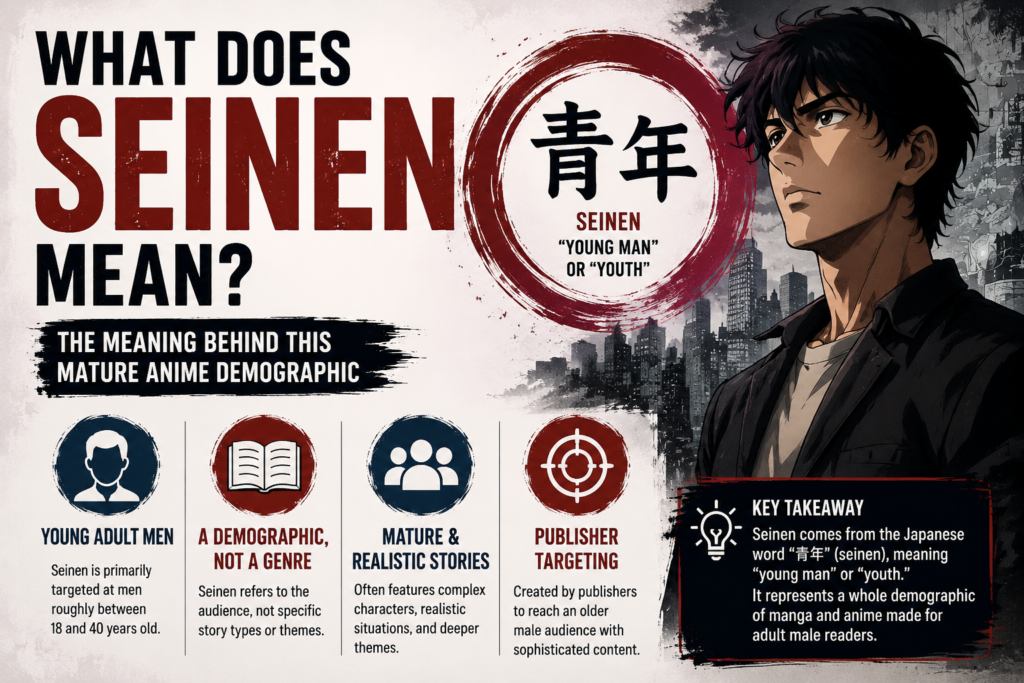
The word seinen comes from the Japanese term 青年, which translates to “young man” or “youth.” In everyday Japanese it simply refers to a young adult male. When the word is used in the anime and manga industry, it takes on a more specific meaning.
In this industry context, the seinen anime demographic refers to manga, anime and light novels that are marketed toward male readers roughly between the ages of 18 and 40.
It is a demographic rather than a genre, similar to how shonen targets younger boys and shoujo targets younger girls. The same idea applies to the seinen manga demographic, since manga is where most seinen series begin before an anime adaptation follows.
Where the Seinen Demographic Came From
Seinen did not always exist as a separate category. It emerged as a distinct classification in the late 1960s, when Japanese publishers noticed that many manga readers were growing older and wanted stories that matched their maturity level. Publishers responded by launching magazines aimed specifically at adult men, and the seinen label was born.
The category expanded significantly during the 1980s, often described as the seinen boom. Since then, fewer new seinen magazines have launched, but existing ones have grown their readership steadily over the decades.
Who Is Seinen Anime Actually Made For?
Seinen is generally aimed at men between 18 and 40 years old, though some sources extend that range slightly higher. Understanding this target audience is an important part of the Seinen Anime Meaning, but it does not mean younger viewers or female fans cannot enjoy seinen content.
Plenty of people outside the target demographic follow seinen series closely. The label simply tells publishers and advertisers who they are primarily marketing to, rather than restricting who can watch or enjoy them.
The female equivalent of seinen is called josei, which targets adult women in a similar age bracket. This comparison also helps clarify the Seinen Anime Meaning as a demographic classification rather than a strict content category.
When people compare josei vs seinen, the main difference usually comes down to audience gender rather than story quality or maturity level, since both demographics can explore equally complex themes.
Seinen vs Shonen: Key Differences
The easiest way to understand seinen anime’s meaning is to compare it directly with shonen, since the two are often confused by newer fans.
Shonen targets younger boys and tends to focus on action, friendship and straightforward heroism. Seinen takes a more grounded approach and speaks to an older audience that expects deeper storytelling.
Before looking at the differences point by point, it helps to know that these traits are general tendencies rather than strict rules. Plenty of exceptions exist on both sides.
- Realism: seinen stories favor grey moral areas over clear good versus evil conflicts, while shonen often keeps its heroes and villains more clearly defined.
- Pacing and focus: seinen spends more time on character psychology and relationships, while shonen usually prioritizes action and forward momentum.
- Violence and tone: seinen is generally allowed to show more graphic violence and mature situations than shonen.
- Romance: seinen tends to present relationships in a realistic, sometimes messy way, rather than the idealized romance common in younger demographics.
- Endings: shonen protagonists usually get triumphant conclusions, while seinen stories are more willing to end on bittersweet or ambiguous notes.
These differences explain why seinen has built a reputation for depth. Fans who want more than surface level action often move toward seinen once they outgrow typical shonen storytelling.
Common Themes and Sub-genres Found in Seinen
Seinen covers an unusually wide range of subject matter, which is an important part of understanding the Seinen Anime Meaning. Some titles lean into dark, dystopian settings with heavy psychological themes, while others take a lighter, slice of life approach.
Common themes include workplace struggles, crime, political intrigue, science fiction, and philosophical questions about morality and existence. These varied themes show why Seinen Anime Meaning cannot be reduced to simply describing dark or mature stories.
Because the demographic is defined by audience rather than content, a seinen title can technically belong to almost any genre, from horror to comedy.
Popular Seinen Anime Examples
Looking at real seinen anime examples helps illustrate what the label looks like in practice and makes the Seinen Anime Meaning easier to understand. Berserk is often cited as a defining example because of its violent content and mature themes. Vinland Saga, Monster, Ghost in the Shell, and Cowboy Bebop are also frequently mentioned as strong entry points for anyone new to the demographic.
These series share a focus on character depth, moral complexity, and a willingness to explore difficult subject matter without softening it for younger viewers. Together, they help show what the Seinen Anime Meaning looks like when applied to actual anime and manga examples.
Why Are Some Anime Mistaken for Seinen?
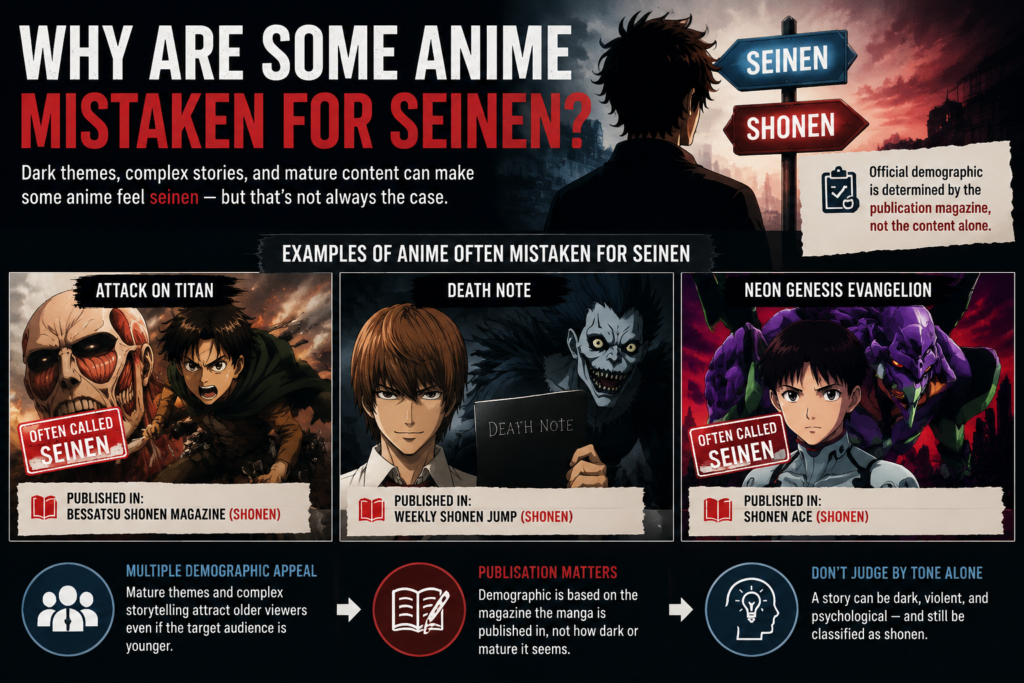
One of the most common points of confusion involves dark or violent shows that people assume are seinen simply because of their tone. Series like Attack on Titan, Death Note and Neon Genesis Evangelion are frequently labeled seinen by casual fans, yet all three were originally published in shonen magazines.
Their mature themes create Multiple Demographic Appeal, meaning they attract older viewers even though their official classification is shonen.
This happens because publication magazine, not content alone, determines the official demographic. A story can feel dark and complex while still being marketed to a younger audience, which is exactly why understanding seinen meaning in anime requires looking beyond tone and violence alone.
Conclusion
The seinen anime meaning ultimately comes down to the audience rather than style. It is a demographic built for adult men who want realistic characters, morally complex stories and themes that go beyond simple good versus evil conflicts.
Once you understand this distinction, it becomes much easier to spot genuine seinen titles and avoid confusing them with dark shonen series that only look similar on the surface.
If you enjoy exploring detailed anime and manga breakdowns like this one, sites such as Pepper0 cover a wide range of anime, manga and visual storytelling topics, including guides like their Jujutsu Kaisen explainer and pieces on manga inspired artwork that fans of the medium often find useful.
Frequently Asked Questions
Is seinen more mature than shonen?
In most cases yes. Seinen generally allows more graphic violence, realistic relationships and morally complex characters than shonen, though exceptions exist on both sides.
Is seinen only for men?
Seinen is marketed toward adult men, but the audience is not restricted to them. Many women and younger viewers enjoy seinen titles, since the label describes the primary target market rather than a strict viewing rule.
Can shonen anime feel like seinen?
Yes. Some shonen titles include dark themes and complex storytelling that resemble seinen, but their official demographic still depends on the magazine they were published in.
What does seinen mean in anime?
Seinen means an anime or manga is primarily marketed toward adult men, generally between 18 and 40 years old, rather than describing a specific genre.