
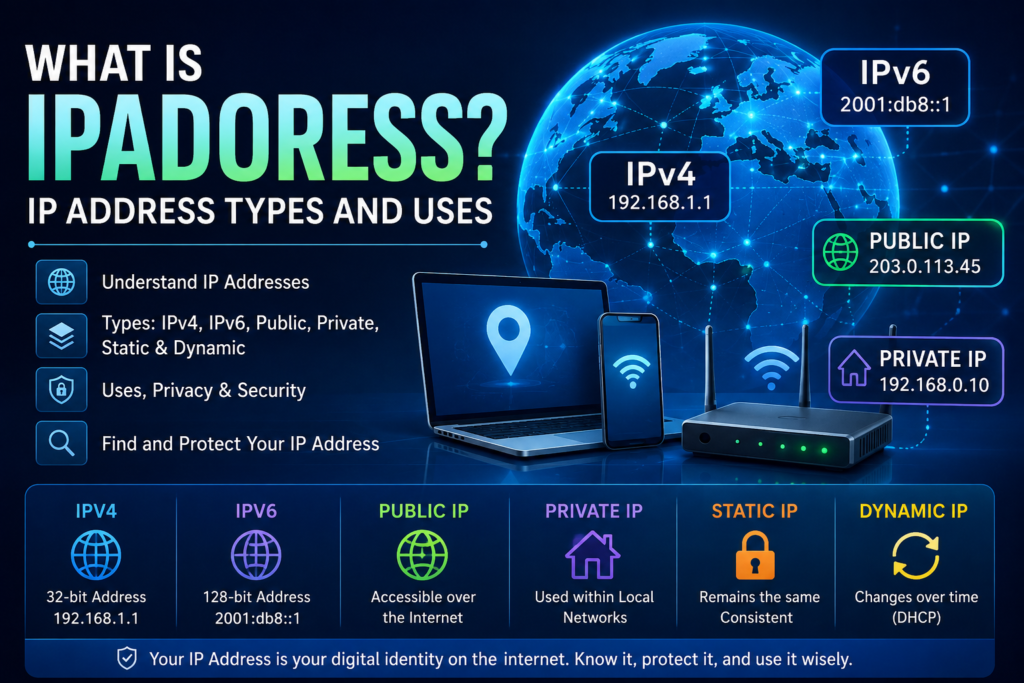
Every device connected to the internet uses an IP address to communicate with other devices and online services. If you have searched for ipadoress online, you are most likely looking for information about an IP address and how it works.
An IP address is a numerical identifier assigned to a device or network connection. It helps networks identify where data comes from and where it needs to go.
From browsing websites and watching videos to using apps and sending emails, IP addresses play an important role in everyday internet communication.
In this guide, we will explain what an ipadoress is, how IP addresses work, their different types, what information they can reveal, and how they relate to online privacy and security.
What Is Ipadoress?
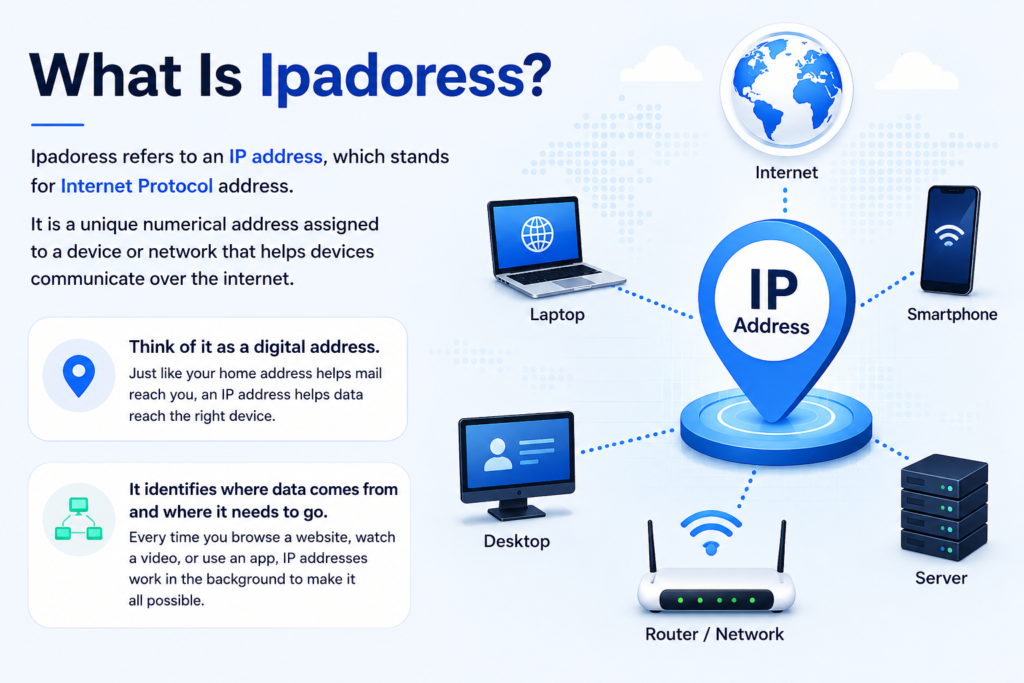
Ipadoress refers to an IP address, which stands for Internet Protocol address. It is a numerical address used to identify a device or network interface when it communicates over a network.
You can think of an IP address as a digital address. Just as a physical address helps deliver a package to the right location, an IP address helps networks deliver data to the correct destination.
For example, when you open a website, your device needs to communicate with the website’s server. The IP address helps establish this connection so information can travel between your device and the server.
IP addresses are not all the same. They can be divided into different categories based on their format, purpose, and how they are assigned. The most common classifications include IPv4 and IPv6, public and private IP addresses, and static and dynamic IP addresses.
Understanding these differences makes it easier to see how devices communicate across the internet and how your network connection works.
How Does an IP Address Work?
An IP address helps devices communicate by giving them an identifiable address on a network. When you visit a website or use an online service, your device sends a request through your network. The IP address helps the network know where that request comes from and where the response should be delivered.
For example, when you open a website, your device first connects to your router or mobile network. The request then travels through different networks until it reaches the website’s server. The server processes the request and sends the requested data back through the network.
Your IP address plays an important role in this communication. It helps identify the source and destination of network traffic so data can reach the correct device or network.
Simple Example of How an IP Address Works?
Suppose you open a website on your phone.Your phone connects to the internet through Wi-Fi or mobile data.Your network assigns or provides an IP address for the connection.
Your phone sends a request to the website’s server.The server receives the request and processes it.The requested information is sent back to your device.Your browser displays the website.
This process happens in a matter of seconds. You usually do not notice the IP addressing and routing happening in the background.
Does Every Device Have an IP Address?
A device connected to a network normally uses an IP address for network communication. However, the address may be assigned differently depending on the network.
For example, devices connected to a home Wi-Fi network may use private IP addresses inside the local network. The router can then use a public IP address to communicate with the wider internet.
This is why the IP address shown on your device may be different from the public IP address that websites see.
What Are the Different Types of IP Addresses?
IP addresses can be classified in several ways. The main differences are based on the IP version, where the address is used, and how it is assigned.
The most common types are IPv4, IPv6, public IP, private IP, static IP, and dynamic IP addresses.
IPv4 Address
IPv4 is the older and most widely used version of the Internet Protocol. It uses a 32-bit address and is normally written as four numbers separated by periods.
For example: 192.168.1.1
Each number can range from 0 to 255. IPv4 provides billions of possible addresses, but the rapid growth of internet-connected devices has made IPv4 addresses increasingly limited.
IPv6 Address
IPv6 was developed to provide a much larger number of internet addresses. It uses a 128-bit address and is written using hexadecimal characters separated by colons.
For example: 2001:db8:85a3::8a2e:370:7334
IPv6 provides an extremely large address space and was designed to support the continued growth of internet-connected devices.
Public IP Address
A public IP address is used for communication over the public internet. Your internet service provider usually assigns a public IP address to your internet connection.
Websites and online services can generally see the public IP address associated with your connection when you access them.
A public IP can help identify the network or ISP handling your connection. However, it does not normally reveal your exact home address by itself.
Private IP Address
A private IP address is used inside a local network such as your home, school, or office network.For example, a router may assign private addresses such as:
192.168.1.10
192.168.1.20
10.0.0.5
Private IP addresses allow multiple devices on the same local network to communicate with each other without each device needing its own public IP address.
Static IP Address
A static IP address is designed to remain the same instead of changing regularly.
Static addresses are often useful for servers, business networks, remote access systems, and other services where a consistent address is important.
Dynamic IP Address
A dynamic IP address can change over time. It is commonly assigned automatically by a network using DHCP.
Most home internet connections use dynamic addressing because it is easier for internet providers and network administrators to manage.
IPv4 vs IPv6: What Is the Difference?
IPv4 and IPv6 are two versions of the Internet Protocol used to identify devices and route data across networks. The biggest difference is the number of addresses each version can provide.
IPv4
IPv4 uses a 32-bit address system. An IPv4 address contains four decimal numbers separated by periods.
Example: 192.168.0.1
IPv4 can provide around 4.3 billion unique addresses. While that number sounds large, the growth of smartphones, computers, servers, smart TVs, IoT devices, and other connected technology has made IPv4 addresses limited.
IPv6
IPv6 uses a 128-bit address system. Instead of four decimal numbers, IPv6 addresses use hexadecimal characters separated by colons.
Example: 2001:db8::1
IPv6 provides a vastly larger address space than IPv4. This makes it possible to support the continued growth of internet-connected devices.
IPv4 vs IPv6 Comparison
| Feature | IPv4 | IPv6 |
| Address size | 32-bit | 128-bit |
| Format | Decimal | Hexadecimal |
| Example | 192.168.0.1 | 2001:db8::1 |
| Address capacity | About 4.3 billion | Extremely large |
| Address notation | Four number groups | Eight hexadecimal groups |
| Development | Older standard | Newer standard |
Why Was IPv6 Introduced?
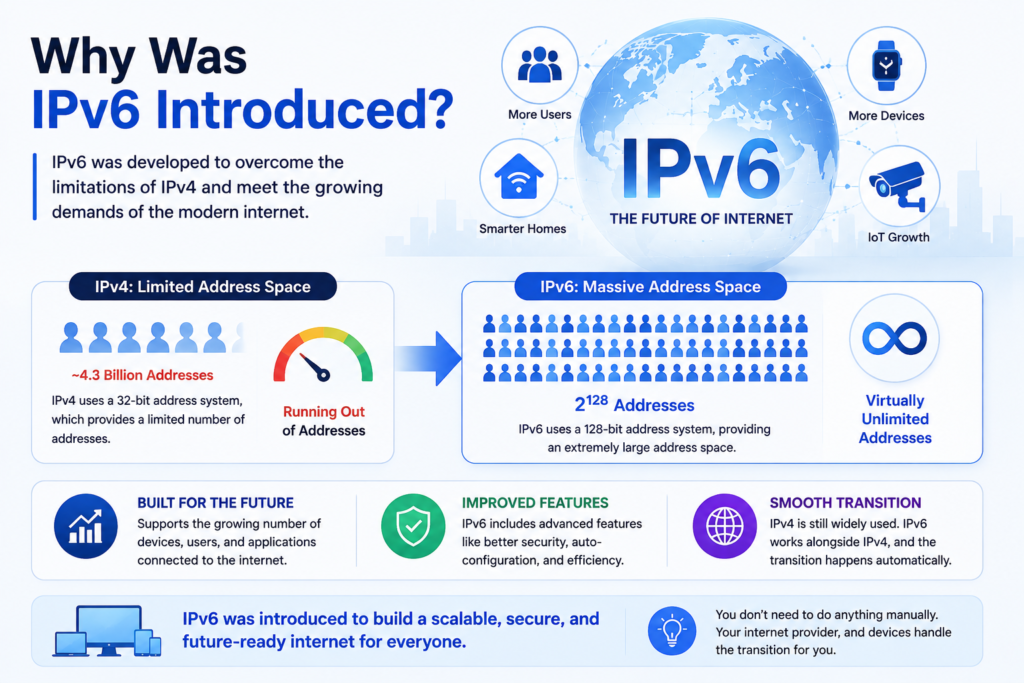
The main reason for developing IPv6 was the limited supply of IPv4 addresses. As more devices connected to the internet, the demand for IP addresses continued to increase.
IPv6 provides a much larger address space and includes features designed for modern networking. However, IPv4 remains widely used, so both protocols continue to operate across the internet.
For many users, the transition between IPv4 and IPv6 happens automatically through their internet provider and network equipment. You may use either version without needing to manually configure anything.
Static vs Dynamic IP Address
Not every IP address stays the same. Some connections use an address that remains consistent while others receive an address that can change over time.
A static IP address is normally kept consistent. This can be useful when a device or service needs to be reachable at the same address. Businesses may use static addresses for servers, remote access systems, cameras, and other network services.
A dynamic IP address can change when a device reconnects to the network or when the provider assigns a different address. Dynamic addressing is common for home internet connections because it allows providers to manage their available addresses more efficiently.
How Dynamic IP Addresses Are Assigned
Dynamic addresses are commonly managed through DHCP, which stands for Dynamic Host Configuration Protocol.
When a device joins a network, DHCP can provide the information it needs to communicate. This can include an IP address along with other network settings such as the default gateway and DNS servers.
The address is generally provided for a specific period called a lease. When the lease expires, the device can renew it or receive another available address.
Which One Do You Need?
For normal activities such as browsing websites, watching videos, gaming, and using social media, a dynamic IP address is usually enough.
A consistent address becomes more useful when you need to host a service or access a network remotely. In those situations, a static IP can make the connection easier to manage because the address is less likely to change.
Your choice is usually determined by your internet provider and the requirements of your network rather than something you need to change for everyday internet use.
If you are also learning about computer hardware and performance, you can explore our guide on what RAM speed means and how it affects your computer.
How to Find Your IP Address?
Finding your IP address can be useful for network troubleshooting, checking your connection, or configuring certain devices and services.
Find Your Public IP
The easiest way is to search “what is my IP address” on Google. The result can show the public IP address associated with your current internet connection.
Find Your Private IP
On Windows, open Command Prompt and type: ipconfig
You can also find the local IP address through your device’s network settings. On Android and iPhone, open the connected Wi Fi network details to view the assigned IP address.
Keep in mind that your public IP and private IP are different. Your router can use the public IP to communicate with the internet while your devices use private IP addresses within the local network.
How to Protect Your IP Address?
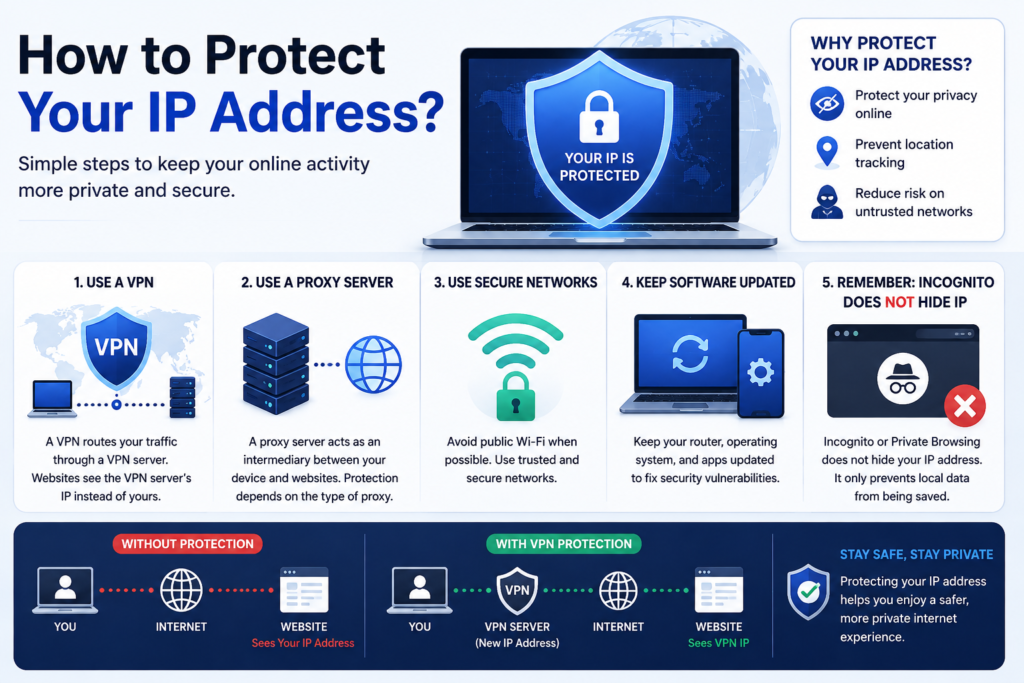
You do not normally need to hide your IP address for everyday internet use. However, protecting it can be useful if you want more privacy or are using an untrusted network.
A VPN is one common option. It routes your internet traffic through a VPN server so websites generally see the VPN server’s public IP instead of the one assigned to your connection.
A proxy server can also act as an intermediary between your device and a website. However, the level of protection depends on the type of proxy and how it handles your traffic.
Using secure networks and keeping your router, operating system, and applications updated can also reduce security risks.
It is important to remember that Incognito or Private Browsing does not hide your IP address. These modes mainly prevent certain browsing data from being stored locally on your device. They do not make you anonymous on the internet.
Conclusion
An ipadoress, commonly known as an IP address, is an essential part of internet communication. It helps devices and networks send and receive data across the internet and local networks.
Understanding the difference between IPv4 and IPv6, public and private IP addresses, and static and dynamic IP addresses makes it easier to understand how modern networks work.
An IP address can also provide limited information about your network and approximate location, but it does not normally reveal your exact physical address.
Whether you are troubleshooting a network connection or learning about online privacy, understanding how IP addresses work can help you use the internet more safely and confidently.For more technology guides and helpful resources, visit Pepper0.
Frequently Asked Questions
What is an ipadoress?
Ipadoress refers to an IP address, which is a numerical identifier used for communication between devices on a network.
Does Incognito hide my IP address?
No. Incognito or Private Browsing mainly limits locally stored browsing information. It does not hide your IP address from websites or your internet provider.
How can I find my IP address?
You can search “what is my IP address” online to find your public IP. Your private IP can usually be found in your device’s network settings.
Does a VPN hide my IP address?
A VPN generally hides your original public IP from websites by routing your traffic through a VPN server. Websites will typically see the VPN server’s IP instead.
Can an IP address reveal my exact location?
Usually not. An IP address can provide an approximate location such as a country or region, but it normally does not reveal your exact street address.